Years ago (2013-ish), somebody noted that in Disney movies, the Darling children from Peter Pan are virtually the only main character children who have both parents. It went viral online as “proof” that Disney “hates” families. This is ridiculous. A lot of children’s literature is permeated in loss, though many times it’s used as part of framing the situation, rather than something delved into in the stories. Why would a set of siblings end up living in a boxcar except that they had no parents? How else do you get a little girl set in the house of a spinster and her brother? This goes back to fairy-tales and beyond.
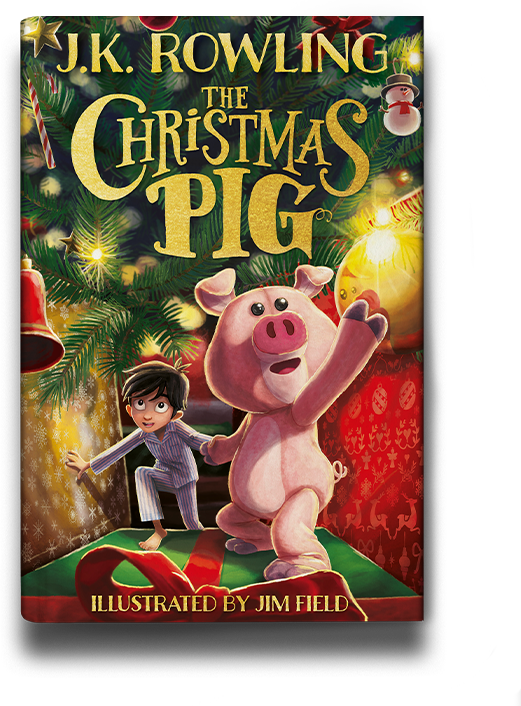
The Christmas Pig, by J.K. Rowling is a little different. At the beginning of the book, the reader is introduced to Jack, a little boy who lives with his parents in England, who is the proud owner of a stuffed toy pig, which is his favorite toy, and which goes with him everywhere. The next couple of chapters start telling how Jack’s life changes as he starts getting a little older, including significant losses that happen along the way. In a way much of the story is incredibly common, but seeing it even mentioned like this in a kids’ book is unusual, to be sure, though maybe in this day in age, it ought not be so uncommon.
One of the things that has helped Jack cope with all the change and loss is the constant companionship of his stuffed pig, nicknamed D.P. And so it happens, one Christmas Eve, D.P. gets lost as well. Jack is beside himself. He’s willing to do anything to find D.P.
Jack is in luck, because as it turns out, Christmas Eve just happens to be a day for miracles, and through a little bit of magic, Jack is allowed to enter the “Land of the Lost”, even though it is strictly prohibited that a real human enter. From this point on, Jack is on a desperate quest to liberate D.P. from the Land of the Lost and bring him back home.

I ended up reading this book on the recommendation of John Granger, of HogwartsProfessor.com and the newer Hogwarts Professor Substack. (I’ve been “chatting” with John, on and off online for two decades now. I’ve got a couple of his excellent books, and I had the pleasure to meet him at a church event in 2010 or so.) Since the Harry Potter days, John and his crew really believe that Rowling is one of the best writers of this age, and work to do some really serious literary analysis of what she writes. I read this post about the book, and then listened to the podcast they put out about The Christmas Pig. The podcast clocks in at a little under 3(!) hours, which I listened to whilst driving around one weekend, and while it probably is too much for most people, a good chunk of the conversation was drawing parallels between “The Land of the Lost” and Dante, and even though I haven’t read Dante, this intrigued me.
The book did not disappoint. It’s probably one of the most well-written and imaginative books I’ve read in a very long time. Besides Dante, I’d also say that there are shades of The Velveteen Rabbit to be discerned here as well. The thought and detail given to the “levels” of the Land of the Lost is amazing, from “Surplus” to “Disposable” to “Bother It’s Gone” to the “City of the Missed”, etc. It’s so true – the things we lose end up in different categories from not even missed to loved and lost. The story is engaging and keeps moving at a pretty good pace – I never noticed any part dragging. There are the sad things in it, and there’s a little scariness, but nothing inappropriate, and would probably be good from about 7+, depending on the kid. From what I’ve read, J.K. Rowling envisioned it as being a read-aloud book for families, and practiced reading it aloud while writing it. It’s definitely engaging from an adult perspective as well, because certainly as adults, we’ve lost more “Things” than children have. There’s a lot going on as far as love and loyalty as well as resilience. Without giving anything of the plot away, I love the idea of how our attention “alivens” things, and that when it comes to things that are loved – like a child’s favorite toy – that they also kind of live on, even when they no longer exist on this plane.
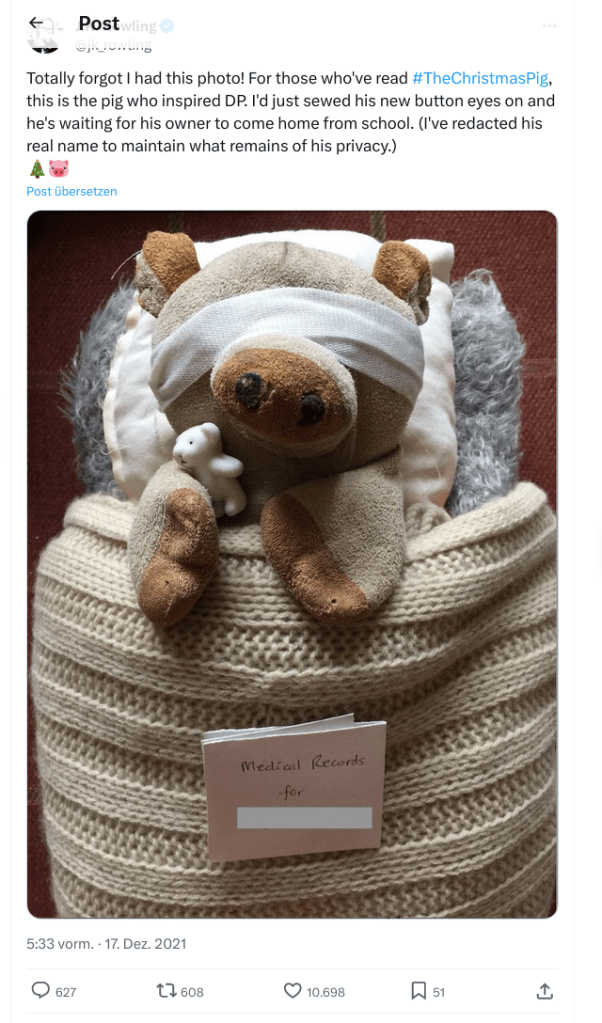
I’d also like to note that Rowling has a sense of humor in her writing, and there are always little things that catch a person as particularly funny sometimes. Considering that Rowling started the book in 2012, the running joke in the book about “pajama boy” (the superhero with his own show), I can’t help but think she was also poking a bit of fun of “pajama boy” who showed up on the political scene in 2013. The idea that the two of them had anything to do with each other had me giggling on a couple of occasions!
I highly recommend the book, and hope that if you haven’t read it, you give it a chance. If you have read it, I’d love to hear your impression!
If you enjoy my posts, please consider:
- Giving this post a “like”
- Sharing this post
- Subscribing to the blog
- Pledging monetary support
- Subscribing to my YouTube or Anchor.fm channels
- Patronizing the links that support this blog: Lilla Rose | Amazon
Thank you very much!

 Breath of Hallelujah