When I was in elementary school, there was a substitute teacher named Esther who was one of my favorites. She was tiny; I don’t think she could have been taller than about 4′ 10″, but she was a very sweet person. A number of years later, I found out that she was from El Salvador, and that apparently her mother had been murdered there for some small act of “resistance” against the gangs that ran that area. Esther, though, had managed to make it to the US, get married to a good man, and start a family far, far away from the chaos of her home country. I’m sure, though, that El Salvador was often in her thoughts, though I couldn’t tell you if she ever brought her children there. I grew up in a very Hispanic area; the countries certainly are different, but the dominance of poverty, so many gangs and cartels, and crime as a way of life is a common thread in the recent memory of a lot of Hispanics.
I went to see “Sound of Freedom” at a 10:20pm showing this past Friday night. The theater was about 2/3 full, and if I had to guess, I’d say at least 80% of the audience was Hispanic. This surprised me for a moment, but after 10 minutes of the film, knowing stories like Esther’s, it makes perfect sense.
If you can, go see the film. I don’t know a lot about cinema, so I couldn’t tell you if it’s the type of film that film critics appreciate or not. However, that really doesn’t matter. The story is engaging and well-paced. The acting is solid. The story pulls at the heart, and the kids and the locations are gorgeous. It is a crying shame that this film had to wait five years to get released. It is Hollywood not of today’s era, but of an era when there were heroes.
The movie depicts the story of a real person, a man by the name of Tim Ballard. Tim has a job working for the US Department of Homeland Security catching really bad guys who enjoy watching people do terrible things to children. Some of them even do terrible things to children themselves. Ten years in, Tim has a wife an six kids, he’s close to being able to collect a government pension, and ostensibly, he’s done some good, catching over 200 pedophiles and building cases against them to put them away for a long, long time.
However, as much as he could simply be happy with that, he’s not. He knows that as quickly as he’s putting people away, there are more perverts, aided by technology, to take their place. The things he has seen people do to children is nearly unbearable, but because most of these children aren’t connected to the United States at all, there’s no mechanism to do much to help them.
As this man is building a case against a notorious pedophile and his connections into the world of child trafficking, Tim is there to catch a pervert try to smuggle a little boy into the US. The bad guy is arrested, and the kid is saved. For most people, this would have been the capstone to a difficult career.
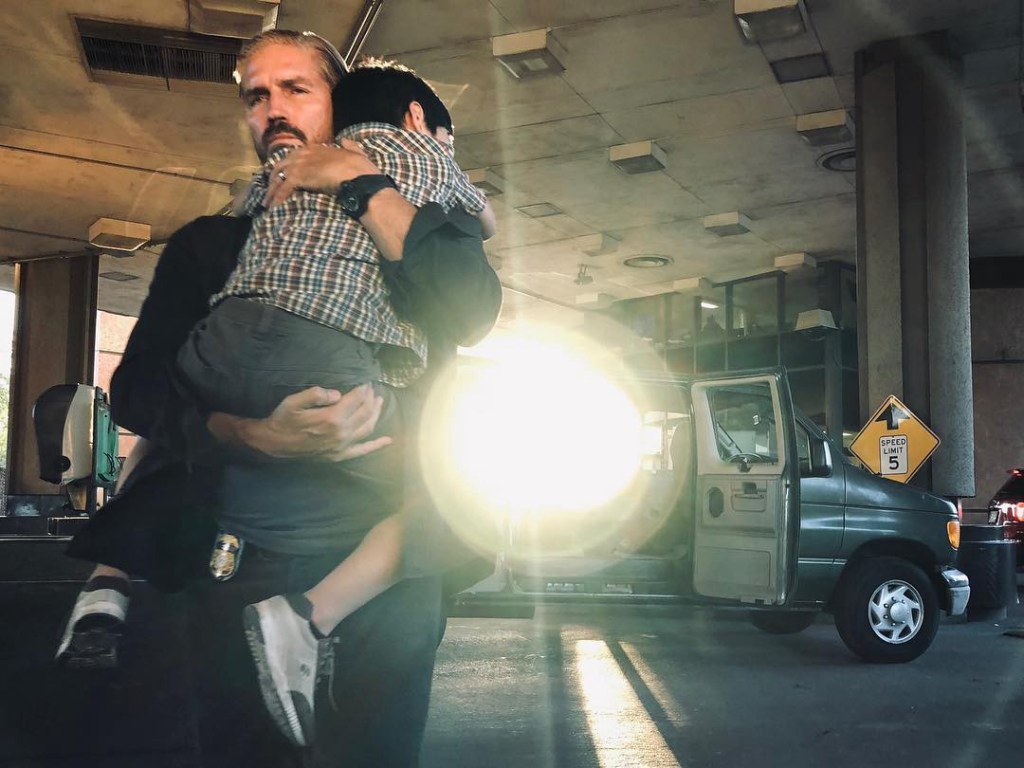
Not for Tim. As he begins to talk to the little boy, the boy lets him know that his sister was also kidnapped. The boy’s father is flown from Honduras to the US to reunite with his son, and Tim sees in the father an honorable man, but a man who has no ability to do anything to find his little daughter. Tim, by virtue of his training, skills, and, shall we say, “privilege” has the potential to find the girl if anyone can. He promises the little boy that he will find the sister, and the movie really takes off from there. Not only do things get more than a little crazy, but he eventually loses the support of the US Government for this mission and instead of giving up, decides to go solo, pension be damned.

This is where you get some who would like to categorize this as a “Christian film” in order to have people write it off and not want to see it. There’s a lot of “Christian” media that is schmaltzy, unfortunately. A lot of “if I believe in Jesus, things will end up A-Okay!” In the film, it’s obvious that, Tim Ballard is a Christian man, and his faith has allowed him to survive seeing the worst in humanity and not be destroyed by it. The shared faith that he and his wife have is an incredible influence on trusting that God has put them in a unique place to help others who cannot help themselves. Do they preach this? No. As is noted here at Ace of Spades, there’s probably less than a minute, total, of explicitly Christian things said. His faith is demonstrated in his actions, rather than his words, in his selfless love for these children he doesn’t know rather than puffing himself up in a comfortable life amongst his friends. Interestingly, Tim Ballard and his family are Mormons, but there’s a small, though incredibly powerful, thread in the film involving the children and a medal of St. Timothy. This led me to believe Tim is Catholic, but there’s no discussion of whether he is or isn’t in the film, and for the purpose of the film, it really doesn’t matter.
Disney acquired this film with the acquisition of 20th Century Fox, and then put ice on it. This movie seems to be everything that Disney wants to get away from now – at its center is a strong and talented (white) man who leans on his faith to make his way in the world. This man uses his talents to rescue and defend those who are weak and helpless. He has to use his brains and brawn to do this. He connects up with other men who can help him achieve these goals. He feels himself connected to something larger through God. He’s a good husband and a good father. He’s a hero, an “everyday saint”, if you will. HOW DARE THEY RELEASE THIS FILM IN 2023, am I right?

The cinematography is beautiful, especially the shots in Columbia. I never thought I’d want to travel there, and were it not for how dangerous it is, I’d certainly be thinking it would be amazing. There’s something psychological between the juxtaposition of the gorgeous landscapes (and even city shots) and the misery and poverty of so many people, both urban and rural.
Now to get back to a little of what I started with. The movie starts out with these children – a brother and sister (Miguel and Rocia) – who live with their father in Honduras. Obviously poor, obviously stuck in poverty, they’re still a family (no explanation is given to what happened to their mother). When a well-spoken woman – a model – comes and says that the children might have a future with modelling, Rocia, who is about 12, is really excited. Their father is a little more cautious, but if this could be a ticket to a better life, why not? Both children are kidnapped into sex slavery, and there’s not a single thing the father can do – he has no money, no influence, no voice.
I believe this resonates a lot with a lot of Hispanics because there are so many of these stories that come out of Central and South America. With Esther, I can’t imagine that her mother, probably as tiny as Esther herself, was any threat to the criminal power of the area. And so it goes. I went with a friend to visit her family in Juarez, Mexico, and for as much as El Paso gets a bad rap in the US, standing on the other side of the Rio Grande, it certainly looks like the shining city on a hill. Kidnapping and human trafficking and sex slavery are issues that have plagued many of these nations, and it is the poorest and the weakest who suffer the most, because they have no way to fight the injustice. The film, without being graphic, shows a lot of incredible ugliness of what goes on there, but it also speaks for those who have had no means to talk about these things to the larger world.

Yes, Jim Caviezel is the star of the film, as Tim Ballard. He’s a white guy, but so is Tim Ballard. He’s moving around in a country where no matter what he does, he sticks out, which is also an interesting dynamic, especially considering the covert nature of his mission. Most of the rest of the cast is Hispanic, and there’s a lot of Spanish in the film. I think it’s used well and the switching from English to Spanish is quite natural, and it’s effectively used to underscore the feeling of being in a foreign place, a visitor to a foreign culture. Some of this culture has found its way into mainstream American culture, especially depending on where one lives, but the connection to the tragedy that is life for so many in so many of these places is something that most non-Hispanic people wouldn’t even consider. As a result, it’s hardly the “conspiracy theorists” who are making this movie so successful. I think one would have to have a heart of stone not to feel some connection to some part of this movie. Being able to tell a story that connects with people is incredibly powerful, and this is a movie that does this. I haven’t seen anybody talk about the other point, though, that I think it connects with many Hispanics at an even deeper level, and I have no way to gauge this analytically, but it’s logical conclusion. As I left the theater at nearly 1am, the sound of a group of ten or twelve Hispanic people discussing the movie followed me out the door.
P.S. 10:20pm showing, theater screen didn’t turn on until 10:30pm and there were issues with the sound for a couple minutes, but they were resolved before the actual film started.

If you enjoy my posts, please consider:
- Giving this post a “like”
- Sharing this post
- Subscribing to the blog
- Pledging monetary support
- Subscribing to my YouTube or Anchor.fm channels
- Patronizing the links that support this blog: Lilla Rose | Amazon
Thank you very much!

 Breath of Hallelujah