It’s amazing how just thinking back on music can bring it to mind again. It’s like calling an old friend and catching up in a matter of a half hour like no time had passed. I went through a time when I could not get enough of the Natalie Merchant album Ophelia. One of the tracks is a song called “King of May”, which, through the power of the internet, I can share with you right here:
I mentioned in the post about the song “Motherland” that I would guess that this song may have some inspiration, at least. from Tsar Nicholas II of Russia, who happened to be born in May. I say this with the idea that the song seems to be commemorating a departure of a king that may be painful, and the melancholy mood of the song reflects that, but with the end result being this person ‘ascending’ to a better place. (At least that’s what I understand from the line “make a hole in the sky for him”.)

There’s a line in the song that has always struck me as particularly poignant, even though I actually didn’t know the full correct lyric until I started writing this post two weeks ago or so. The line goes “Praise the crazy mother’s son who loved his life.” (I thought the line was actually “Crazy, crazy mother’s son…)
Why would that strike me as such an important concept? I actually think that there’s more than a little serendipity here, because a day or so after I started this post, Rod Dreher posted the following quote from a piece that he did in 2012.
It’s a cliche to say so, but there really is something about us Americans — and probably all Anglo-Saxons — that regards pleasure with deep suspicion. If it is to be embraced, we think, it is to be embraced as a respite from the daily grind, as an escape from reality — but always an illusion.
Rod Dreher, The Paris Effect, 10 October 2012
I’m sure that a lot of this has to do, first of all, with the huge influence the Puritans had on American culture. Their religious beliefs practically shunned happiness as an evil frivolity. Secondly, it probably also has a fair amount to do with the fact that the United States was still being settled until fairly recently. One of my great-grandmothers was a woman who went out west – western North Dakota – as a single woman in the first years of the 1900s to seek her destiny there. I’m not going to say that living out on the “edge of civilization” was joyless, but life was hard, and the pursuit of happiness had to be derived more from the mode of living rather than the cultivation of “the finer things”. It’s great if your town can have a live theater, but the thing is, they’d better have a jail first. Practicality for necessity’s sake isn’t necessarily beautiful. The socks a mother knit to keep her children’s feet from freezing probably weren’t works of art, but she could make beautiful things when the need arose and the time allowed for it.
In any case, Dreher continues:
“What, though, if pleasure is as much a part of life as work and suffering? What if there is as much to be learned and loved in the feast as in and from the fast?”
“The danger, of course, is that one could make all this pleasure into one’s god. That’s obvious enough, but what isn’t so obvious, at least not to us Americans, is the risks in believing that any sensual delight cannot be godly. We were created as fleshly creatures, by a God who declared His creation to be good. Food, drink, song, art, architecture — they are His gift to us, and to be given thanks for, and enjoyed.”
Rod Dreher, ibid.
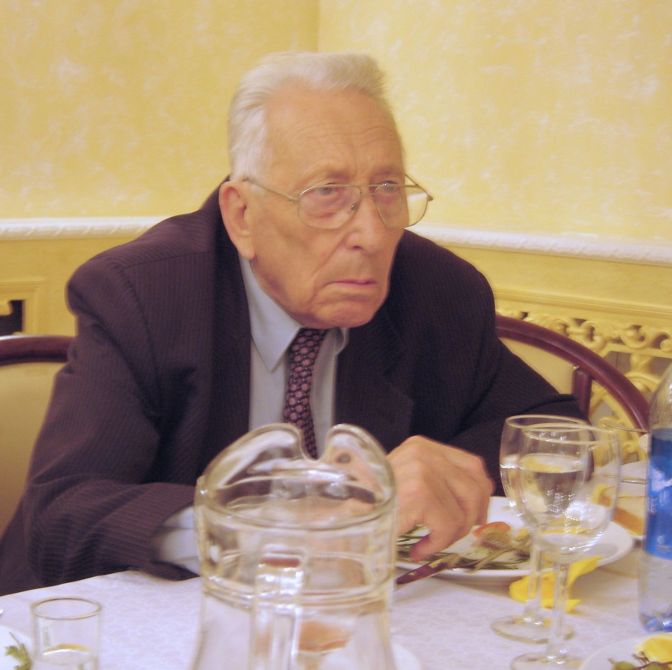
When I was part of the trip to Orenburg in 2007, to honor what would have been Alexander Schmorell’s 90th birthday, one of his friends, Nikolai Hamazaspian spoke in front of our smallish group that was gathered for dinner, including the mayor of Orenburg. What he wanted to make abundantly clear, above all else, was the fact that his friend was somebody who loved and relished his life and all the opportunities he had. He loved horseback riding and art and literature and getting to spend time outdoors; he loved music and concerts and having friends to spend time with. Many are the accounts that his smile could light up a room (especially for the ladies, it seems!) As much as he wasn’t necessarily thrilled with the prospect of becoming a doctor, he was smart enough and talented enough to make it in medical school, and had he finished, the world would have been his oyster. Hamazaspian wanted to really get it through our heads that he wasn’t dour or suicidal, and he didn’t see the world as an evil place from which one can “volunteer” to make an early exit. No, he said Alexander was full of life and he loved it all. In that case, why be willing to die? Because he loved God more, and despite all his faults and failings, he dedicated himself to serving the Truth.
The Bible tells us not to love the things of this world, and that’s well so. When we love the things, we attach to them too much, and they become our idols. However, God gave us a beautiful world, He gave us wonder, and He gave us people to enjoy this life with – if life is nothing more than pain and drudgery, something is very, very wrong. Some of the most joyful people I have known are the young Ukrainian nuns I met many years ago – they were in their mid-20s like me and it was an absolute joy to spend time with them there or play Mario Kart at my place. In a sense, these women are “dead to the world”, but at the same time, they allow themselves to recognize the good and partake of it.
And so, I’m not sure that someone necessarily should be praised for simply loving his life, but the line in the song is a good reminder that someone who does so ought not be condemned. However, when we recognize those who love their lives and are willing to lose it in love, in service to God, or in service to each other, these are the people who ought to be praised and remembered.
If you enjoy my posts, please consider:
- Giving this post a “like”
- Sharing this post
- Subscribing to the blog
- Pledging monetary support
- Subscribing to my YouTube or Anchor.fm channels
- Patronizing the links that support this blog: Lilla Rose | Amazon
Thank you very much!

 Breath of Hallelujah
Want ieder die bidt, ontvangt. Wie zoekt, vindt. En voor wie klopt, gaat de deur open.’
Mattheüs 7:8 HTB
LikeLiked by 1 person
Absolutely! (Unfortunately, I can’t respond in Dutch. I can read a fair amount of it because I know German and English, but that’s about it. Leider kann ich nur auf Englisch oder auf Deutsch antworten. Ich kann etwas von die niederlaendische Sprache lesen und verstehen, aber schreiben geht gar nicht.)
LikeLike